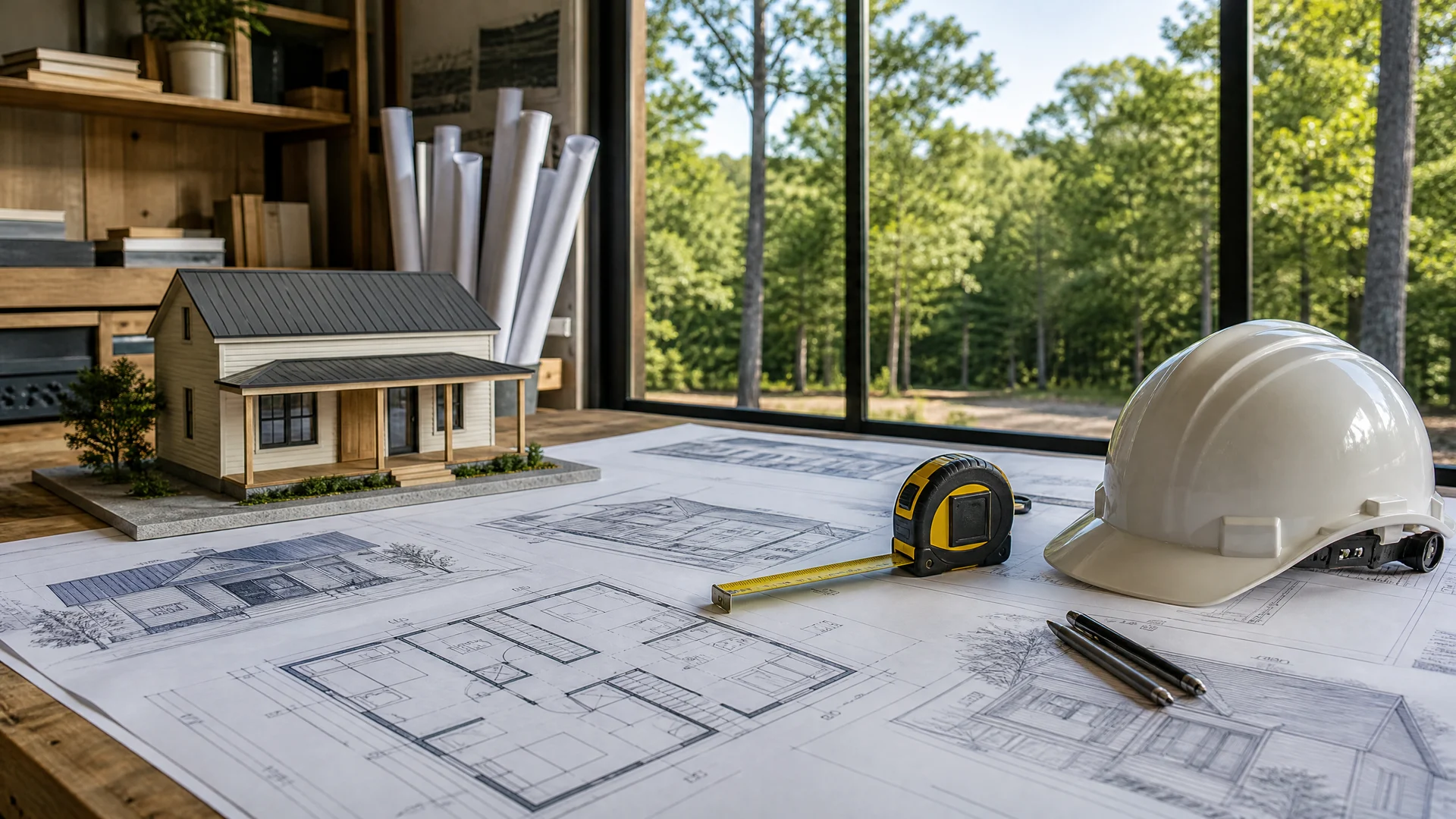
ADU Cost Guide for East Texas: How Much Does It Cost to Build a Guest House or In-Law Suite in 2026?\n\nIf you have been thinking about adding an accessory dwelling unit (ADU) to your property in East Texas, the first question on your mind is probably the same one I hear from nearly every homeowner I talk to: how much is this going to cost me?\n\nThe honest answer is that ADU costs in East Texas vary quite a bit depending on the type of unit you build, the size, the finishes you choose, and whether your land needs site work before construction can begin. In this guide, I am going to walk you through real cost ranges for every type of ADU we build in Cherokee County, Nacogdoches County, Anderson County, Smith County, and the surrounding area — so you can go into your project with a clear picture of what to expect.\n\n---\n\n What Is an ADU and Why Are East Texas Homeowners Building Them?\n\nAn ADU is a secondary living unit on the same property as your primary home. It has its own kitchen or kitchenette, bathroom, sleeping area, and entrance. In East Texas, people call them by a lot of different names: guest house, in-law suite, casita, granny flat, backyard cottage, or garage apartment. They all refer to the same basic concept.\n\nThe reasons I see homeowners in Jacksonville, Rusk, Alto, Nacogdoches, Henderson, and Lufkin building ADUs have shifted noticeably over the past few years. The most common motivations I hear are:\n\nKeeping aging parents close while giving everyone their own space. Multi-generational living is deeply rooted in East Texas culture, and an ADU lets family members stay nearby without anyone feeling crowded.\n\nGenerating rental income. A well-built 600-square-foot guest house on a rural East Texas property can rent for $800 to $1,200 per month, which covers a significant portion of a mortgage payment.\n\nCreating a home office, studio, or workshop with a full bathroom. Especially since remote work became mainstream, homeowners want a dedicated space that is separate from the main house.\n\nAdding long-term property value. A permitted, well-constructed ADU adds meaningful resale value, particularly in Cherokee County and Smith County where demand for multi-use rural properties has grown.\n\n---\n\n ADU Cost Ranges in East Texas: By Type\n\nThe biggest factor in your total project cost is the type of ADU you build. Here is a breakdown of what we typically see in our market.\n\n Garage Conversion ADU: $25,000 to $75,000\n\nConverting an existing attached or detached garage into a livable space is the most affordable ADU path for most homeowners. You already have a foundation and a roof, so the work focuses on insulation, drywall, flooring, adding a bathroom, roughing in a kitchenette, and upgrading electrical and HVAC.\n\nOn the lower end of that range, you are looking at a basic studio conversion with standard finishes. On the higher end, you are adding a full bathroom, a proper kitchen, upgraded windows, and finishes that match the main house.\n\nThe main variable is whether your existing garage slab is level and in good condition. If it needs to be broken out and repoured, that adds $3,000 to $8,000 to the budget.\n\n Studio ADU (Detached, 300 to 500 sq ft): $60,000 to $100,000\n\nA small detached studio is the most popular ADU type I build in Cherokee County and Nacogdoches County. At 300 to 500 square feet, it is large enough for comfortable full-time living but small enough to keep costs manageable.\n\nThis range includes site preparation, foundation, framing, roofing, siding, windows, doors, insulation, drywall, flooring, a full bathroom, a kitchenette, electrical, plumbing, and HVAC. It does not include utility connection fees, which vary by county and utility provider.\n\n One-Bedroom ADU (Detached, 500 to 750 sq ft): $90,000 to $150,000\n\nA one-bedroom, one-bathroom detached ADU in the 500 to 750 square foot range is what most families choose when the unit will be used as a permanent in-law suite or long-term rental. It has enough space for a real bedroom, a full kitchen, a living area, and a bathroom without feeling cramped.\n\nIn East Texas, this size hits a sweet spot for cost efficiency. You are getting a fully functional home in a compact footprint, and the construction cost per square foot tends to be lower than on very small units because fixed costs like foundation work and HVAC are spread across more square footage.\n\n Two-Bedroom ADU (Detached, 750 to 1,000 sq ft): $140,000 to $200,000\n\nA two-bedroom ADU is the largest type we typically build, and it functions essentially as a small standalone home. This is the right choice when the unit needs to house a couple, a small family, or when you want maximum rental income potential.\n\nAt this size, you are also looking at higher permit fees, more complex utility connections, and potentially additional site work. The cost per square foot tends to run slightly lower than smaller units, but the total project cost is naturally higher.\n\n Interior Conversion (Basement, Attic, or Bonus Room): $30,000 to $80,000\n\nConverting existing interior space — a basement, a large attic, or an unused bonus room — into a self-contained unit is often the most cost-effective path when the space is already there. The main costs are adding a bathroom, a kitchenette, a separate entrance, proper egress windows if needed, insulation upgrades, and HVAC zoning.\n\nInterior conversions are less common in rural East Texas than in urban markets because most properties here do not have basements, but they come up frequently in older homes in Jacksonville and Nacogdoches with large attic spaces or over-garage bonus rooms.\n\n---\n\n ADU Cost by Size: Price Per Square Foot in East Texas\n\nThe table below gives you a quick reference for cost per square foot based on finish level. These ranges reflect what we see in Cherokee County and the surrounding counties in 2026.\n\n| Finish Level | Cost Per Square Foot | Best For |\n|---|---|---|\n| Standard | $120 to $160 per sq ft | Rental income, basic in-law suite |\n| Mid-Range | $160 to $220 per sq ft | Primary family use, matching main home |\n| Premium | $220 to $300+ per sq ft | High-end finishes, custom details |\n\nA standard 600-square-foot detached ADU at mid-range finishes would land in the $96,000 to $132,000 range before utility connections and permit fees.\n\n---\n\n What Drives ADU Costs Up in East Texas\n\nSeveral factors can push your project cost above the baseline ranges above. I want to be upfront about these because they catch homeowners off guard more often than anything else.\n\nSite preparation and land clearing. If the area where you plan to build has trees, brush, or uneven terrain, you will need land clearing and grading before the foundation can go in. On a wooded East Texas lot, this can add $3,000 to $15,000 depending on the acreage involved and the density of the vegetation.\n\nUtility connections. Connecting a new ADU to water, sewer or septic, and electricity involves both contractor costs and utility company fees. In unincorporated Cherokee County and Nacogdoches County, where many properties use well water and septic systems, adding a second structure often means expanding the septic system. A new or expanded septic system can add $8,000 to $20,000 to the project.\n\nDistance from the main house. The farther the ADU is from your main home, the longer the utility runs need to be. Electrical conduit, water lines, and sewer lines all add cost per linear foot.\n\nCustom design and architecture. If you want the ADU to match the architectural style of your main home exactly — matching roofline, siding, windows, and trim — expect to pay a premium over a standard build.\n\nPermit fees and inspections. In incorporated cities like Jacksonville, Rusk, and Nacogdoches, permit fees typically run $500 to $2,500 depending on square footage. In unincorporated county areas, permit requirements vary. Always confirm with your local building department before starting.\n\n---\n\n ADU Regulations in East Texas: What You Need to Know\n\nTexas does not have a single statewide ADU law. Regulations are set at the city or county level, which means the rules in Jacksonville are different from the rules in unincorporated Cherokee County.\n\nHere is what I tell every homeowner before we start a project:\n\nIn incorporated cities (Jacksonville, Rusk, Alto, Nacogdoches, Henderson, Lufkin, Tyler), you will need a building permit, and the city's zoning code will dictate setbacks, maximum size, and whether an ADU is allowed on your lot. Most cities in our area allow ADUs on single-family lots, but always verify before you invest in plans.\n\nIn unincorporated county areas, requirements are generally less restrictive. Cherokee County, Nacogdoches County, Anderson County, and Smith County do not have county-wide zoning in most unincorporated areas, which means you have more flexibility on size and placement. You will still need a building permit for any structure with plumbing and electrical.\n\nDeed restrictions and HOAs can prohibit ADUs even where the city allows them. Always review your deed restrictions before planning.\n\nSeptic system requirements are governed by the Texas Commission on Environmental Quality (TCEQ) and your county's environmental health office. Any structure with a bathroom requires an approved wastewater system.\n\n---\n\n How to Finance an ADU in East Texas\n\nMost homeowners in our area finance ADU construction through one of three paths.\n\nA home equity loan or HELOC is the most common approach. If you have built equity in your primary home, you can borrow against it at relatively low interest rates and use the funds for construction.\n\nA construction loan converts to a permanent mortgage once the project is complete. This works well for larger ADU projects where the total cost is significant.\n\nCash savings. Many of the ADUs I build in Cherokee County are cash projects, particularly for homeowners who have owned their rural property for many years and have substantial equity.\n\nIf the ADU will be used as a rental, the rental income can offset the loan payment significantly. A $120,000 ADU financed at current rates might carry a monthly payment of $750 to $900, while a well-located East Texas rental ADU can generate $900 to $1,200 per month.\n\n---\n\n What the Process Looks Like With Republic Land Clearing and Construction\n\nWhen a homeowner in Cherokee County or the surrounding area calls us about an ADU project, here is how we approach it.\n\nWe start with a free on-site estimate. I come out to your property, walk the site, and talk through what you want to build. I look at the terrain, the existing utilities, the distance from the main house, and any site prep that will be needed.\n\nWe provide a detailed written estimate before any work begins. You will know the full scope and cost before you commit to anything.\n\nOnce you approve the estimate, we handle permitting, site preparation, foundation work, framing, all trades (electrical, plumbing, HVAC), and finish work from start to finish. You do not have to coordinate multiple contractors.\n\nWe build ADUs across Cherokee County, Nacogdoches County, Anderson County, Smith County, Rusk County, and Angelina County. If you are in Jacksonville, Rusk, Alto, Bullard, Nacogdoches, Henderson, Lufkin, Tyler, or any of the surrounding communities, we can help.\n\n---\n\n Frequently Asked Questions About ADU Costs in East Texas\n\nHow long does it take to build an ADU in East Texas? A detached studio or one-bedroom ADU typically takes 3 to 5 months from permit approval to move-in. Larger units or projects with significant site work can take 5 to 7 months.\n\nDoes an ADU require a separate address? Not necessarily. Many ADUs in unincorporated areas share the primary home's address with a unit designator (e.g., 123 Main St, Unit B). In cities, the building department will advise on addressing.\n\nCan I rent out my ADU in Texas? Yes. Texas law allows ADU rentals in most jurisdictions. Some cities require the property owner to live on-site, so check your local ordinances. Short-term rentals (Airbnb, VRBO) may have additional local regulations.\n\nWill an ADU increase my property taxes? Yes, adding a permitted structure increases your property's assessed value and therefore your property taxes. The increase is typically modest relative to the value added.\n\nDo I need a separate utility meter for the ADU? Not always. Many ADUs in East Texas share the primary home's utility meters, particularly for water and electricity. Separate meters are an option if you want to bill a tenant separately for utilities.\n\nWhat is the difference between an ADU and a guest house in Texas? Legally, there is no meaningful difference in most Texas jurisdictions. Both refer to a secondary dwelling unit on the same property. The term "guest house" is more commonly used in rural East Texas; "ADU" is the technical term used in building codes and permit applications.\n\n---\n\n Ready to Get a Free Estimate?\n\nIf you are considering an ADU, guest house, or in-law suite on your East Texas property, I would be glad to come out and take a look. We provide free, detailed written estimates with no obligation. Call us at 430-244-3435 or submit a quote request online, and we will get back to you within one business day.\n\nWe serve Cherokee County, Nacogdoches County, Anderson County, Smith County, Rusk County, Angelina County, and all surrounding communities across East Texas.
Need project-specific guidance? Request a written estimate or call 430-244-3435.