Ground cover & selected trees
Choose mulching when the goal is an access lane, pasture edge, trail, fence line, or selective opening—not an all-bare construction footprint.
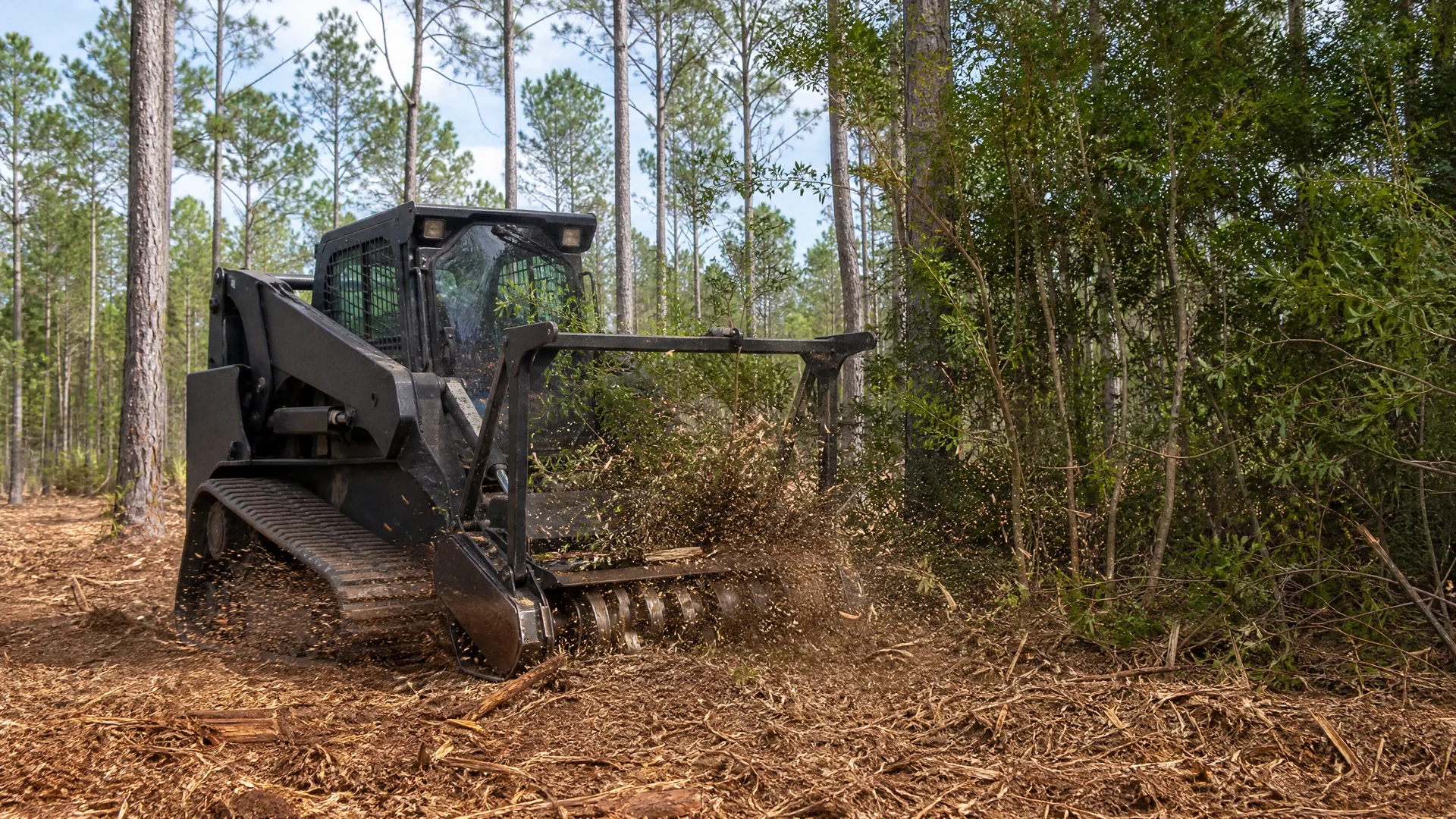
Vegetation Management
East Texas forestry mulching for brush, small trees, pasture edges, access lanes, and selective clearing. Fixed written quote after a free site visit.
Request a Written EstimateForestry mulching is vegetation management, not a stripped-site method. It processes agreed brush, briars, yaupon, vines, small trees, and understory into a mulch layer that remains on the ground. That makes it useful for owners who want to open a pasture edge, reclaim a trail, restore a fence line, improve visibility, or create access while retaining ground cover and selected mature trees.
Republic uses a $2,000 daily production basis with mobilization included inside the service area, then gives the owner a fixed written quote after a property visit. Light brush can work out to about $700–$1,000 per acre, medium growth about $2,000 per acre, and dense thicket about $4,000–$6,000 per acre. These are production-planning figures, not a promise that mulching is the right method for every site.
Vegetation-management lens
Forestry mulching is designed for a managed ground-cover outcome: selectively reduced vegetation, retained features, and a practical plan for regrowth.
Choose mulching when the goal is an access lane, pasture edge, trail, fence line, or selective opening—not an all-bare construction footprint.
Identify canopy, creek buffers, structures, fences, utility corridors, gates, wells, and areas that remain natural before the machine route is set.
Mulching reduces current brush; it does not promise permanent control. Decide how the treated ground will be mowed, maintained, grazed, or prepared for a later phase.
The aim is to reduce selected above-ground vegetation while leaving a shredded organic cover on suitable ground. That cover can help limit exposed soil and can make access and maintenance easier. The result is different from a fully grubbed construction footprint: roots, larger stumps, rock, soil, and buried material remain unless the written scope says otherwise.
This approach is often a fit for overgrown acreage, pasture edges, hunting lanes, fence lines, selective opening around mature trees, and early visibility work. It is not sold as permanent vegetation control. Yaupon and other species can resprout or return from seed, so a responsible plan may include mowing, a qualified provider’s treatment, fencing, grazing management, or a later maintenance pass.
Mulching projects benefit from a clear plan for what stays: shade trees, creek buffers, desirable native stands, fence lines, gates, utility corridors, wells, septic components, structures, and access boundaries. Selective treatment around retained features takes more care than a broad open pass, and it should be reflected in the quote rather than treated as free extra work.
During the walkthrough, Republic maps the treatment area, machine route, turning areas, crossings, slopes, and visible drainage. The owner can point out areas to leave natural, trees to protect, future trail or pasture routes, and parts of the property that need a different method. That creates a managed-landscape decision rather than an all-or-nothing clearing decision.
Mulching processes above-ground vegetation. It is not traditional stump grinding, below-grade root removal, excavation, finish grading, or a substitute for compaction. A slab, septic field, pond embankment, driveway, or commercial footprint may need roots and larger stumps addressed below grade, plus engineered elevations, material, drainage, or testing. Those needs shift the conversation to land clearing and dirt work.
Very wet or soft ground, steep slopes, drainage-sensitive crossings, large timber beside structures, exposed rock, constrained access, sites with debris to haul, and projects that need a bare construction surface may also call for another approach. Republic will say when mulching is not the responsible fit and can sequence it with separately scoped clearing or dirt work when that is useful.
The first pass is only part of vegetation management. Soil moisture, slope, ground cover, and visible water paths influence how and when equipment moves. Work can be postponed after heavy rain to avoid ruts and unnecessary disturbance. Creeks, wet spots, culverts, wells, septic components, gates, fences, and utility lines should be identified before the work starts; contact Texas 811 before excavation or any work that could disturb marked facilities.
After mulching, the owner should decide what the treated ground needs to become: a maintained access lane, a pasture edge, a trail network, a visible fence line, or an early phase before construction. Mulch is not an engineered drainage or erosion-control design, and it does not remove the need to verify local floodplain, road-access, utility, or other parcel-specific requirements.
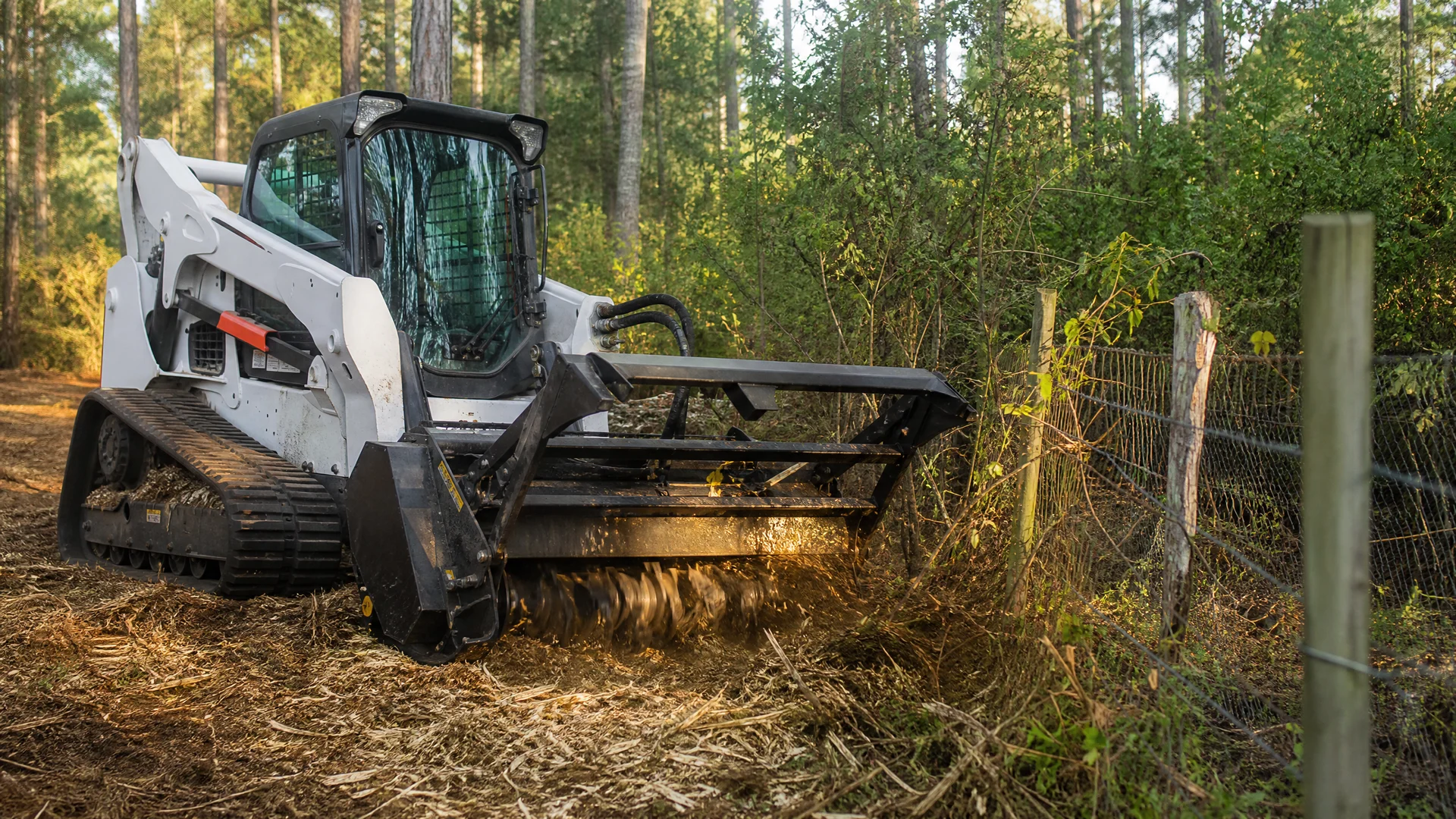
The gallery caption identifies only what has been documented. A representative image is never described as a job in a city unless the project record supports that location.
Republic’s forestry-mulching planning basis is $2,000 per day with mobilization included in the service area, followed by a fixed written quote. Light brush can work out to about $700–$1,000 per acre, medium growth about $2,000, and dense thicket about $4,000–$6,000. The property visit confirms density, tree size, selective treatment, access, soil moisture, regrowth needs, and whether different clearing or dirt work is required.
Republic is based in Alto and serves Cherokee, Smith, Rusk, Anderson, Nacogdoches, Angelina, and Houston counties, including Jacksonville, Rusk, Tyler, Nacogdoches, Lufkin, Palestine, Alto, and Henderson. Availability still depends on property access, scope, and schedule, so confirm the address when requesting an estimate.
Reviews are shown only when they can be traced to the original reviewer or review platform. Republic does not turn a general East Texas review into a review for a particular town, acreage, or service that was not documented. Ask the team for the current review link or for a project reference that can be shared for your type of work.
It processes agreed above-ground vegetation into a mulch layer that remains on suitable ground. It does not automatically remove all roots, large stumps, rock, trash, or soil, and it is not finish grading.
Mulching can reduce selected brush and small vegetation while retaining ground cover and avoiding a separate debris-haul phase on suitable sites. It is often useful where the owner wants managed access, visibility, or pasture-edge treatment rather than a bare construction footprint.
No. It reduces the existing vegetation, but some species can resprout or return from seed. A maintenance plan may include mowing, a qualified provider’s treatment, grazing management, or future treatment passes.
It can be a useful first phase for brush and selected vegetation, but a pad, driveway, slab, septic area, or utility route may require separate stump treatment, excavation, grading, compaction, design, or approvals.
Very wet or steep ground, drainage-sensitive crossings, large timber near structures, exposed rock, limited work space, debris that must leave the property, or a project needing a bare and graded footprint may require another method.
Tell us what you are planning. Share the location, work needed, and timing so we can review the site conditions and follow up with a clear written scope.