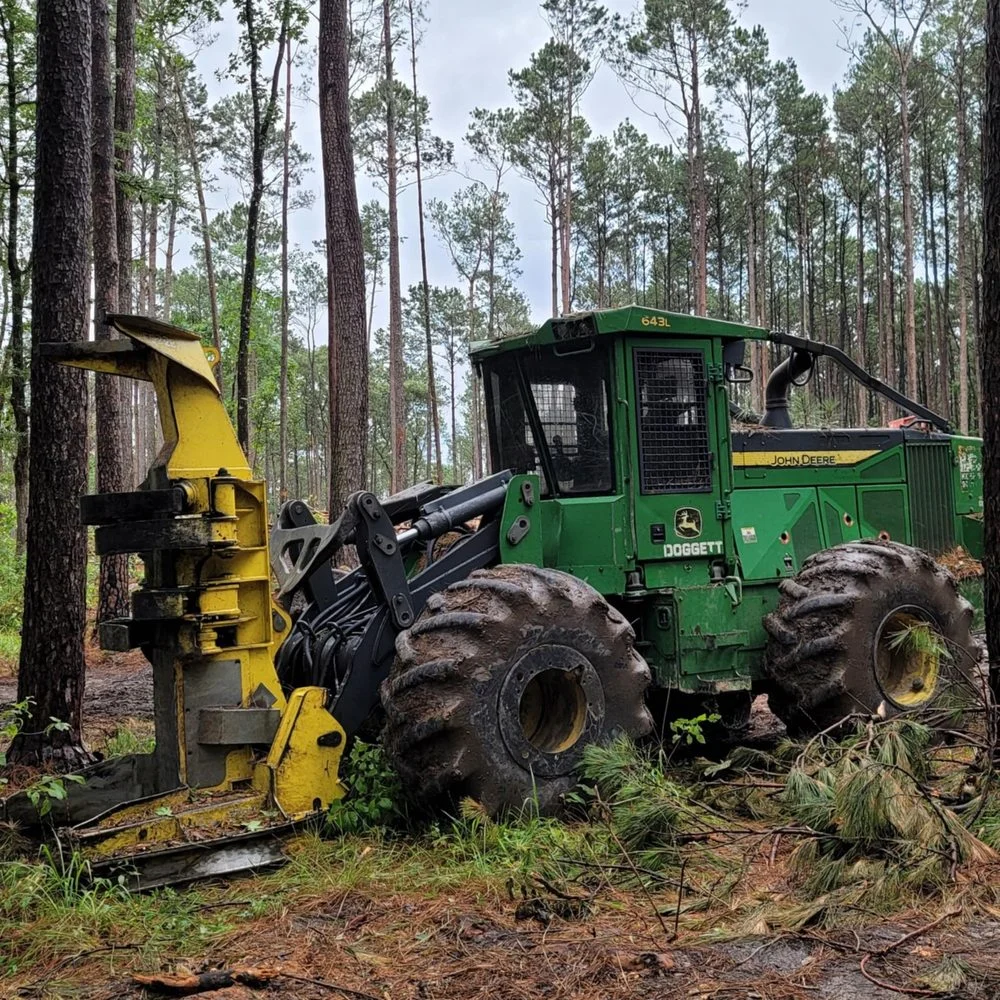
From Republic Land Clearing and Construction, Alto, TX · 430-244-3435 · Mon–Sat 8 am–6 pm Serving Cherokee, Smith, Rusk, Anderson, Nacogdoches, Angelina and Houston counties
> Please read first. This guide is general guidance, not legal, engineering or surveying advice. Rules vary by county, by city limits (ETJ) and by the specific site, and they change over time. Before you spend money, confirm requirements with your county, your surveyor, a licensed septic professional, your electric provider and any local groundwater district.
---
Days 1–7: Know what you bought
The most expensive mistake new landowners make is clearing before they know exactly where their lines are.
Checklist
- [ ] Get your survey and plat. Your title company or closing file usually has them. If there's no recent survey, consider ordering one from a Registered Professional Land Surveyor before any clearing near a line.
- [ ] Find your corners. Walk to the corner pins (iron rods or pipes) and flag them so they're easy to see.
- [ ] Read your easements. Pipeline, power line and road easements are common in East Texas. Easement holders may limit what you can build, dig or plant inside them. Find them on the survey and in your title commitment.
- [ ] Check the flood map. Look up your tract on the FEMA Flood Map Service Center (msc.fema.gov). Creek bottoms can sit in a mapped floodplain, which may affect where you can build and whether you need a floodplain permit from the county.
- [ ] Look up your appraisal district record. Each county has a Central Appraisal District (for example, Cherokee CAD or Smith CAD). Note your acreage, your account number and any agricultural or timber valuation the land carries now.
- [ ] Read your deed restrictions and any HOA or subdivision rules. Some rural subdivisions set minimum home sizes, ban mobile homes or limit outbuildings.
Days 8–21: Decide what the land is for
What the land is for decides where you clear and what you keep. Common goals:
- Homesite or barndominium. You need a pad, a driveway, utilities, a septic system and water.
- Hunting. You need lanes, food plots, stand sites and perhaps a cabin pad.
- Cattle, hay or another ag use. You need pasture, fencing and water.
- Timber, or just holding the land. You need firebreaks and access trails.
About ag and timber valuations: if the land currently has an agricultural (often called "ag exemption") or timber valuation, a change in use, such as clearing timber for a homesite, can affect it and may trigger a rollback tax. Talk to your county appraisal district before you clear. Requirements vary by county.
Days 22–35: Plan access and utilities first
Before you decide what to clear, decide where the driveway, power, water and septic will go.
Driveway and culvert. A driveway coming off a county road usually crosses the bar ditch, and many counties require a culvert there, sometimes with a set minimum size and a permit or approval from the county or road precinct. Call your county commissioner's precinct office before you build the entrance. A TxDOT state highway requires a separate TxDOT driveway permit.
Gate placement. Set the gate back from the road far enough that a truck and trailer can pull completely off the road while someone opens it.
Electric. Much of rural East Texas is served by electric cooperatives. Which one depends on your exact location; providers in this region include Cherokee County Electric Cooperative, Rusk County Electric Cooperative, Deep East Texas Electric Cooperative and Houston County Electric Cooperative. Some areas are served by other utilities. Call the provider for your address early, because line extensions can take time and may cost you money. Ask them how wide the right-of-way along the power line route needs to be cleared.
Septic (OSSF). Most rural homes in Texas need an on-site sewage facility, which is regulated under TCEQ rules and permitted locally (often by the county or another authorized agent). Texas generally uses a soil evaluation by a certified site evaluator, not an old-style "perc test," together with a design from a licensed designer or engineer. Many East Texas clay soils call for an aerobic system with spray heads instead of a conventional drain field. Do this before you lock in the pad location. The septic system needs room, required setbacks from the house, the well, property lines and water, and in some designs an area that stays clear.
Water. You can connect to a rural water supply corporation if one serves your road, or drill a private well. Ask nearby water supply corporations about service and tap fees first. Water wells in Texas are drilled by licensed water well drillers (licensed through TDLR). In some counties a groundwater conservation district requires the well to be registered or permitted. Keep the well away from the septic system; your driller and septic designer will confirm the required separation distances.
Before anyone digs: call Texas 811. Texas law requires an underground-utility locate request at least two business days before excavation (excluding weekends and holidays). Call 811 or file online at texas811.org. Note that 811 locates public lines only; it doesn't find private lines you or a previous owner installed.
Days 36–50: Clearing method 101
Forestry mulching grinds brush and small-to-medium trees in place into a mulch layer. There are no burn piles and no hauling, it's gentler on the soil, and the mulch helps with erosion. It typically takes small and mid-size stumps to about ground level. It's best for underbrush, homesite surroundings, trails, hunting lanes and reclaiming overgrown pasture.
Clear and grub removes trees, stumps and roots below grade. You need it where a slab, pad, driveway or septic area must have solid, root-free ground.
Selective clearing keeps the trees you want, such as shade oaks, nice pines or a screen along the road, and removes the rest.
What it typically costs (Republic's pricing):
- $2,000 per day for forestry mulching, land clearing and dirt work, with mobilization included within our service area.
- One mulcher typically covers about 2–3 acres a day in light brush, about 1 acre in medium growth, and 1/3 to 1/2 acre in dense thicket.
- You get a fixed price per job, quoted after a site visit, so there's no open-ended bill. See /land-clearing-cost-east-texas for typical per-acre figures.
Six things that move the price: brush density, tree size, slope, wet ground, access, and buried debris (old fence wire, trash, rock).
Timing in East Texas. Clay soils get soft and rut easily after heavy rain, which is common in winter and spring, so start dates often depend on the weather to protect your ground. Drier stretches usually let the work go faster and cleaner. Plan some slack in your schedule.
Burning. Outdoor burning in Texas falls under TCEQ outdoor-burning rules, and counties can declare burn bans. Check the Texas A&M Forest Service burn ban map and your county before burning anything. Forestry mulching avoids the question entirely.
Trees worth keeping: healthy hardwoods away from the pad (roots extend well past the drip line, so give them room), trees that screen you from the road, and shade on the west side of the house. Ask yourself whether a tall tree could fall on the house.
Days 51–70: Dirt work
Pad location. Put the pad on the highest practical ground and out of natural drainage paths. Leave room for the septic system, the driveway turnaround and future buildings. Never place a pad in a draw where water runs after a storm.
Pad elevation. Build the pad up so water drains away from the foundation on every side. Your builder or engineer specifies the final elevation and compaction for the foundation type you choose.
Settling. A built-up pad of fill needs proper compaction, and builders often want time or testing before they pour the foundation. Ask your builder what they require before the pad is built, so it's done to their spec once.
Driveway basics. Crown the driveway so it sheds water. Put culverts where it crosses drainage. Use a base and gravel thickness that suits the trucks it will carry: concrete trucks and barndo steel deliveries are heavy.
Ponds. Pond site, soil type and watershed size decide whether a pond holds water. Some situations, such as dams on a stream, can involve state water rights or permits, so ask before you build.
Days 71–90: Build or maintain
The usual order: survey → utility and septic plan → clearing → pad and driveway → septic soil evaluation and permit → well or water tap → electric service → foundation → build. Your builder and septic designer may adjust this order.
Choosing a builder: get written scopes, ask for references from recent projects you can drive by, and confirm who handles permits and inspections. Rules vary: unincorporated areas of Texas counties often have fewer building codes than cities, but septic, floodplain and driveway rules still apply.
Regrowth. Yaupon, sweetgum and pine saplings come back quickly in East Texas. Plan a touch-up mow or mulch-back to keep cleared areas open.
Firebreaks. If you hold timber, keep cleared firebreaks and access lanes, especially along property lines and around buildings.
---
Managing it all from Dallas or Houston
- Get a video walk-through instead of driving out to meet each contractor.
- Insist on a written scope that lists what is and isn't included.
- Ask for photo or video updates every day work happens.
- Set gate codes or a lockbox, and keep a list of who has access.
- Meet a neighbor. Someone nearby who can call you after a storm is invaluable.
- Do the final walk by video before you pay the final invoice.
Budgeting worksheet (fill in your own quotes)
| Item | Your quote |
|---|---|
| Survey | $ |
| Clearing / forestry mulching | $ |
| House or barndo pad | $ |
| Driveway + culvert + gravel | $ |
| Septic design, permit and install | $ |
| Water well or water tap | $ |
| Electric line extension / service | $ |
| Permits and fees (county, floodplain, driveway) | $ |
| Building | $ |
| Contingency (10–15% is a common planning rule of thumb) | $ |
Seven expensive mistakes
- Clearing before the survey, onto a neighbor's land or into an easement.
- Putting the pad in a drainage path.
- Building the entrance without the county's culvert approval.
- Burning during a burn ban.
- Fixing the house spot before the septic soil evaluation.
- Clearing land that has an ag or timber valuation without first asking the appraisal district about rollback taxes.
- Hiring three separate crews to clear, cut the pad and build the driveway, and paying three mobilizations.
---
Next step: a free Satellite Site Plan
Send us your property location. Within about 2 business days we'll send back an aerial map marked with a clearing boundary, trees to keep, a likely pad spot, a driveway route and drainage notes, plus a ballpark range. Then we walk the site with you, in person or on video, and give you a fixed written price.
Call or text 430-244-3435 · Mon–Sat, 8 am–6 pm · republiclandclearing.com/new-landowner-homesite-package