Define the footprint
Mark the homesite, driveway, pasture, fence line, utility route, access lane, and features that must remain protected.
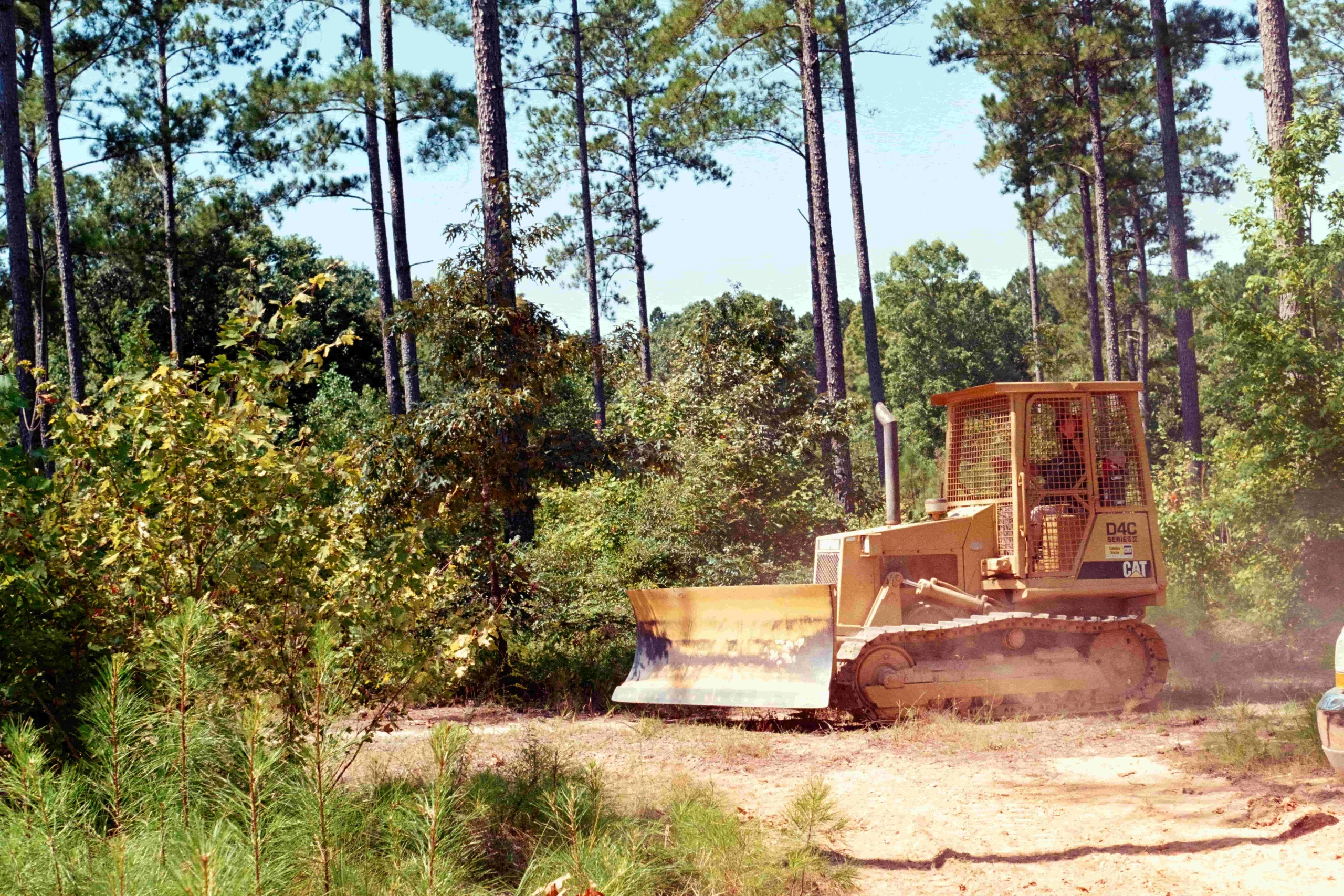
Services
East Texas land clearing, brush removal, access work, and site preparation. $2,000/day, mobilization included; fixed written quote after a free site visit.
Request a Written EstimateLand clearing is the site-preparation path for owners who need to turn an overgrown tract into a defined footprint for the next stage: a homesite, shop, driveway, pasture, fence line, or utility route. The work begins before a machine enters the gate. Republic identifies the work boundary, retained trees, access, visible drainage, material that must leave, and the finish the next trade actually needs. The result should be a usable written scope—not a vague promise to ‘clear it out.’
Republic plans clearing from a $2,000 daily production basis with mobilization included in the service area, then issues one fixed written quote after the property visit. Light brush can work out to about $700–$1,000 per acre, medium growth about $2,000 per acre, and dense thicket about $4,000–$6,000 per acre. Tree diameter, roots and stumps, material handling, selective removal, wet ground, access, and the required final condition decide the actual scope.
Site preparation lens
Land clearing is organized around the footprint that comes next—not simply how much vegetation is visible today.
Mark the homesite, driveway, pasture, fence line, utility route, access lane, and features that must remain protected.
Separate brush processing from tree work, root and stump treatment, hauling, material staging, and any separately scoped dirt work.
State whether the result is a managed opening, a cleared tract, a debris-ready area, or the first phase before pad and driveway work.
A clearing project has to answer practical questions before the first pass: Where does the driveway enter? Which trees stay? Does the site need a bare construction footprint, a pasture edge, a trail, or a visual opening? Are old fences, culverts, creek edges, utility corridors, wells, septic components, or structures inside the work area? Marking those decisions protects the owner from paying to redo work after the next phase begins.
Republic walks the tract with the owner to establish boundaries and identify visible site constraints. The written scope records the treatment area, method, protected features, access assumptions, material handling, and what lies beyond the contract. Surveying, engineered drainage, septic design, utility relocation, imported fill, and authority approvals are separate unless they are specifically stated.
A land-clearing scope can combine selective tree work, brush processing, conventional removal, debris handling, access work, and preparation for a later dirt-work phase. Forestry mulching can be part of that conversation when vegetation is processed in place. It is not the same as removing roots, exporting material, or establishing a level, compacted building surface.
The right method depends on the handoff. A hunting lane or pasture edge may keep mulch and selected canopy. A slab, septic area, pond embankment, or driveway may require a different conversation about larger stumps, root zones, subgrade, fill, compaction, grades, and drainage. Republic separates those choices in the written quote so a property owner can see what is vegetation work and what is site construction.
For a homesite or shop, the useful sequence may be access first, then clearing, stump or root treatment appropriate to the finish, drainage shaping, and a separately scoped pad or driveway. For pasture, the priority may be a selective opening that protects mature trees and avoids disturbing more ground than needed. Combining phases can reduce repeated mobilization, but it does not make elevations, base material, utility routes, or engineering requirements disappear.
Water and ground conditions are part of the sequence. Wet clay, gullies, creek crossings, soft shoulders, narrow gates, overhead lines, old wire, trash piles, and limited turnarounds can change the start date or the machine route. Republic adjusts work when conditions would cause avoidable rutting or damage. Texas 811 should be contacted before excavation, and the owner confirms property-specific city, county, floodplain, road-access, utility, and septic requirements.
Cleared can mean many different finish conditions. It may mean brush reduced, trees selected, material mulched, stumps cut low, debris staged, roots removed, a path opened, or a footprint made ready for excavation. The quote should not leave those terms to assumption. Republic describes the condition it is proposing to leave and identifies any follow-on dirt work, hauling, erosion work, or maintenance that is not part of the clearing scope.
Project-gallery photos show documented categories of Republic work, not a universal per-acre result. They are useful for seeing equipment and completed conditions, but brush density, timber, moisture, access, and desired finish decide a new property’s production. The same care applies to customer feedback: only verifiable reviews and documented project references are used.
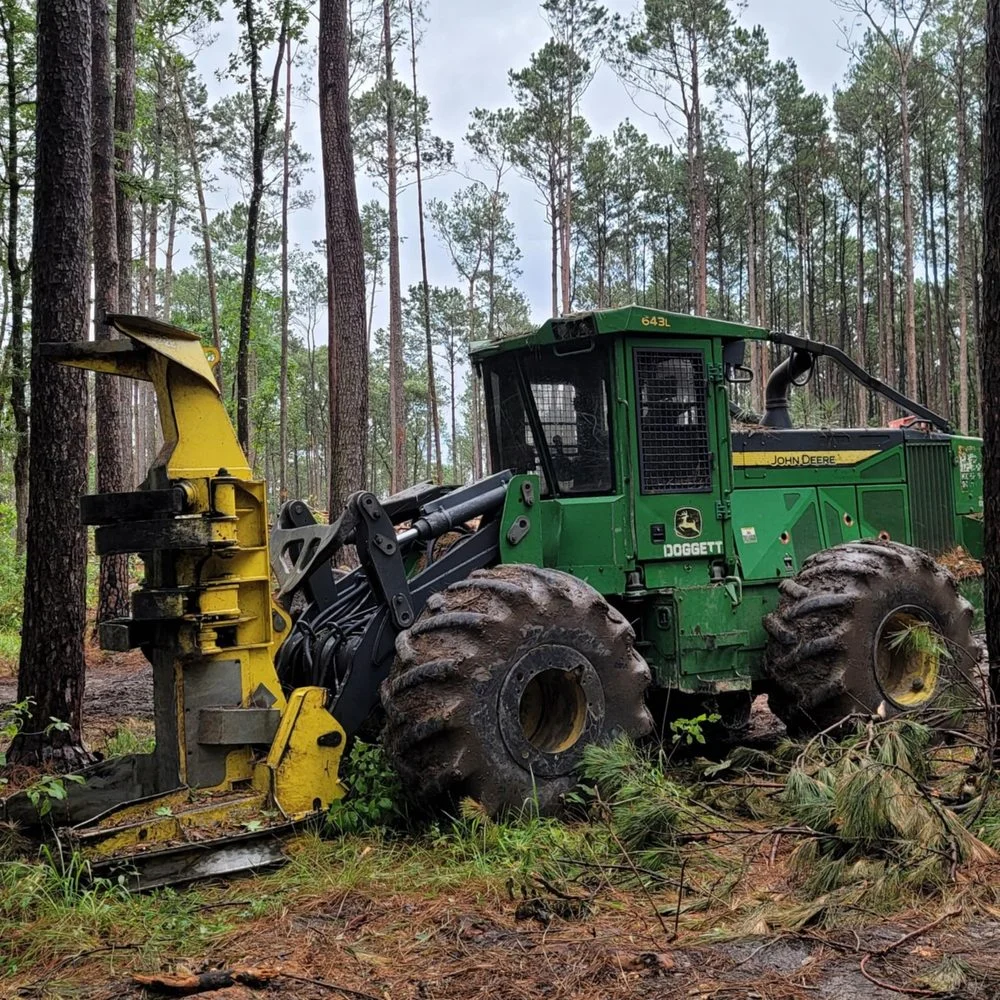
The gallery caption identifies only what has been documented. A representative image is never described as a job in a city unless the project record supports that location.
Republic uses a $2,000 daily production basis for land clearing, with mobilization included within the service area, then issues a fixed written quote after the property visit. Light brush may work out to about $700–$1,000 per acre and dense thicket about $4,000–$6,000 per acre. Large timber, roots and stumps, hauling, selective work, wet ground, grading, and material quantities change the final scope.
Republic is based in Alto and serves Cherokee, Smith, Rusk, Anderson, Nacogdoches, Angelina, and Houston counties, including Jacksonville, Rusk, Tyler, Nacogdoches, Lufkin, Palestine, Alto, and Henderson. Availability still depends on property access, scope, and schedule, so confirm the address when requesting an estimate.
Reviews are shown only when they can be traced to the original reviewer or review platform. Republic does not turn a general East Texas review into a review for a particular town, acreage, or service that was not documented. Ask the team for the current review link or for a project reference that can be shared for your type of work.
A useful scope identifies the work boundary, trees or structures to protect, the removal method, material handling, stump expectations, access, the intended finish, and items that require separate work or authority approval.
Clearing is often an early site-preparation phase, but a build-ready site can also require root treatment, excavation, drainage, pad material, compaction, utilities, and design or approval work. Those items are quoted separately when needed.
Republic plans work from a $2,000 daily basis with mobilization included in the service area. Light brush can work out to about $700–$1,000 per acre, medium growth about $2,000, and dense thicket about $4,000–$6,000. The final price is fixed after a site visit.
Yes. The written scope should separate vegetation work from pad elevation, material, drainage, compaction, utilities, engineering, and inspection requirements so the owner knows how the phases connect.
Requirements vary by city limits, county, road authority, floodplain, utility corridor, water feature, and project scope. Confirm the specific property with the authority having jurisdiction before work begins.
Tell us what you are planning. Share the location, work needed, and timing so we can review the site conditions and follow up with a clear written scope.