Republic Land Clearing and Construction charges $2,000 per day for forestry mulching and land clearing, with mobilization included within the service area. The day rate is the production basis; the customer receives one fixed price in writing after a free site visit rather than an open-ended daily bill. A useful budget starts with how much ground one machine can safely finish, not with a generic number that ignores the brush, trees, access, and desired final condition.
For planning, light brush can work out to about $700–$1,000 per acre when a mulcher can cover two to three acres in a day. Medium growth is often about $2,000 per acre when production is close to one acre per day. Dense yaupon, vines, and tightly packed young timber can take two or three days per acre, or about $4,000–$6,000 per acre. These are typical estimates, not quotes. A written fixed price follows a walkthrough of the actual property.
Typical production and price context
These are planning estimates rather than a quote. A fixed written price follows the site visit.
Site condition
Typical production
Planning estimate
Light brush: open understory, briars, small saplings, scattered yaupon
About 2–3 acres per day
About $700–$1,000 per acre
Medium growth: steady yaupon, sweetgum, pine saplings, and some mid-size trees
About 1 acre per day
About $2,000 per acre
Dense thicket: solid yaupon, vines, and tightly packed young timber
About 1/3–1/2 acre per day
About $4,000–$6,000 per acre
Pads, ponds, driveways, culverts, and other dirt work
Scoped by quantities and site conditions
Quoted as a fixed project scope
Why a fixed quote is more useful than a headline rate
Equipment time is a practical way to estimate work, but owners do not want an open-ended bill. Republic reviews density, tree size, ground moisture, access, trees to preserve, obstacles, and the finish you need. That becomes an estimate of machine-days and then one fixed written price for the agreed scope. If the job takes longer under that scope, the customer is not billed for downtime.
Mobilization is included in the $2,000 day rate inside the service area. The written scope records the treatment area, access assumptions, material handling, retained trees, stump expectations, drainage work, and any pad or driveway work. Engineering, surveying, utility relocation, septic design, imported material, and work beyond the marked area are included only when stated.
What changes the production rate
Brush density is usually the largest variable. The same acre can take a few hours when it has scattered brush or most of several days when it is packed with yaupon, vines, and saplings. Large timber can slow a mulcher and may need a different method. Selective work around a home, fence, pond, utility, or retained tree also takes more care than an open block of vegetation.
Terrain and ground conditions matter. Creek banks, gullies, wet bottoms, and soft East Texas clay can change the route, production rate, or start date. Work may be postponed after heavy rain to avoid ruts and unnecessary soil disturbance. Narrow gates, soft crossings, old wire, trash piles, rock, buried debris, and limited turnaround space should be identified before equipment arrives.
The desired finish matters just as much as the vegetation. A hunting lane, pasture reclaim, and build-ready homesite are different scopes. Forestry mulching processes above-ground vegetation and commonly leaves a mulch layer. It is not traditional stump grinding, root excavation, finish grading, or a guarantee that land is ready for a slab or septic field. Those needs are scoped separately as dirt work.
Mulching, clearing, and dirt work after the first pass
Forestry mulching is a good fit when the goal is to reduce brush and small-to-medium vegetation while leaving a protective ground cover. The material stays on site, so there is no separate debris-haul phase on many suitable jobs. The approach can help with access lanes, pasture reclaim, fence lines, selective clearing, and early project visibility. Some species can regrow, so mowing, herbicide by an appropriately qualified provider, or repeat treatment may be part of a long-term plan.
Traditional clearing or dirt work is the better conversation when roots and larger stumps need to come out, a pad must be built, a driveway needs base and drainage, or an owner needs a bare and graded construction footprint. Republic can sequence clearing with pads, ponds, driveways, culverts, and drainage work so one written scope describes the handoff from raw property to the next trade. The site visit is where that sequence is defined.
Prepare for a useful site visit
Bring the property address or nearest crossroads, rough acreage, photographs of the thickest areas, and the outcome you want: trail, pasture, homesite, fence line, driveway, pond, or pad. Point out gates, low crossings, utilities, septic areas, water features, structures, fences, and areas that stay untouched. Texas 811 should be contacted before excavation; local authorities answer property-specific city, county, floodplain, septic, or road-access questions.
A gallery photo can show equipment or a finished condition, but it is not a price sheet. The fastest route to an exact number is a free walkthrough and written scope before scheduling.
A practical project process
Share the property basics Send the location, rough acreage, a few photos, your goal, and any known access, drainage, utility, fence, or keep-tree constraints.
Walk the land Republic reviews density, tree size, access, ground conditions, and the finish needed for the next phase.
Choose the method The scope distinguishes mulching, clearing, debris handling, stump treatment, grading, and any dirt work instead of treating them as one vague line item.
Receive a fixed written quote The quote records the included work, the assumptions, and exclusions before equipment is scheduled.
Complete and inspect the work After the agreed work is complete, the site is reviewed against the written scope and the next maintenance or construction step is discussed.
Documented project gallery
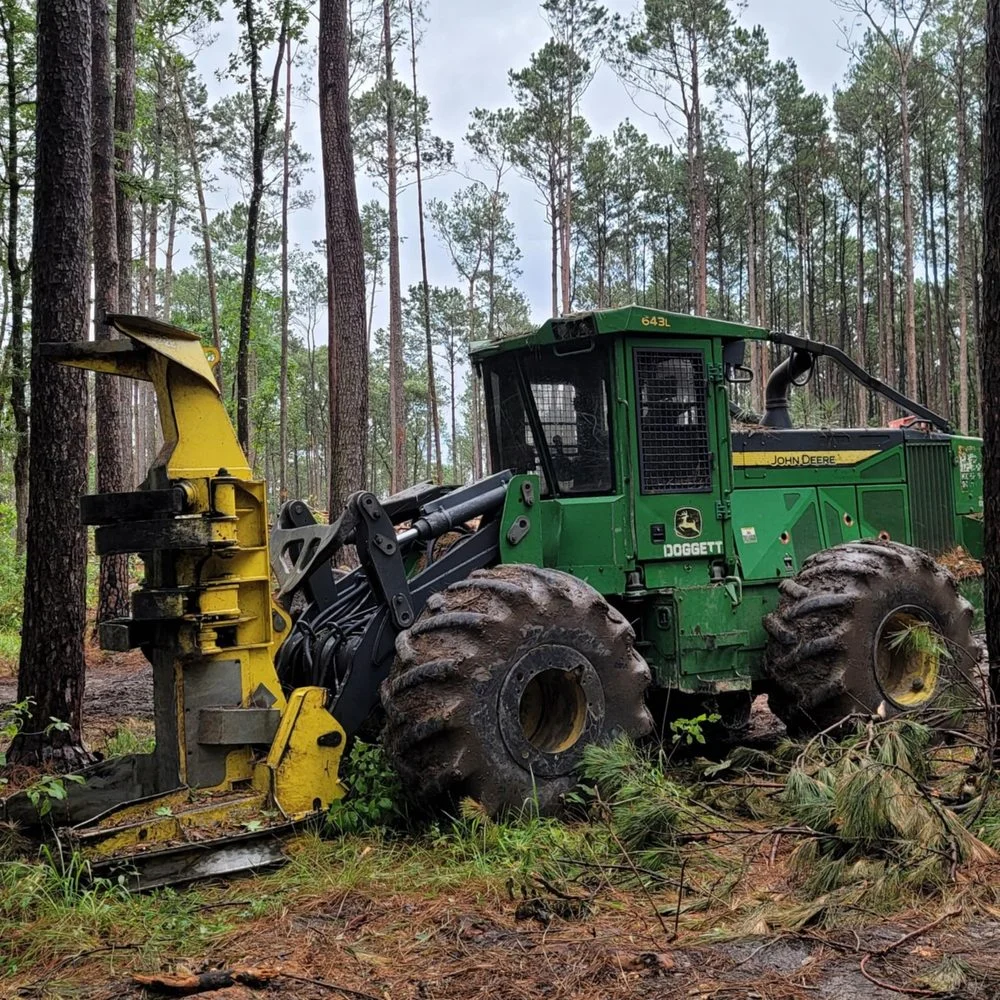
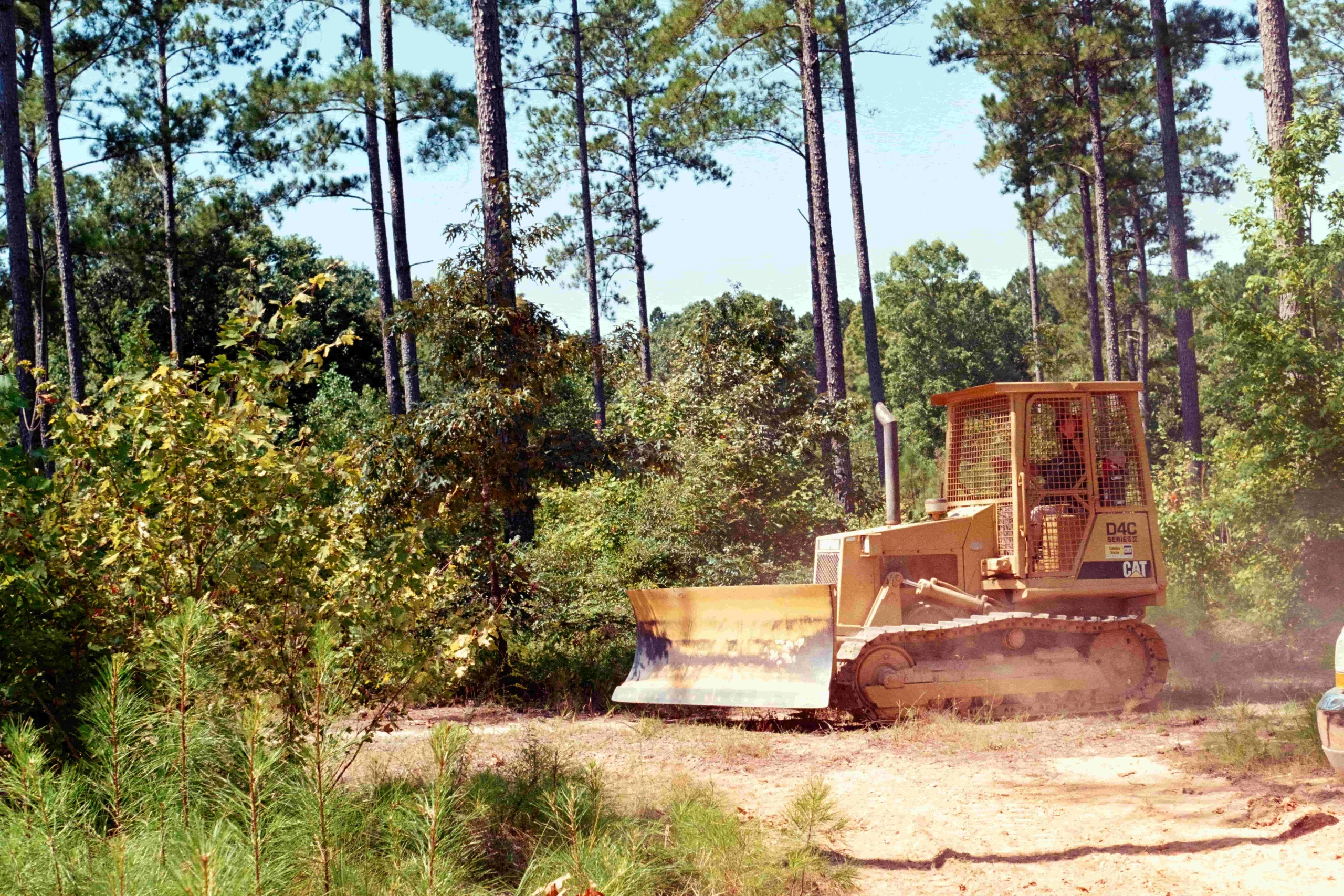
Project gallery note. Documented Republic project-gallery image: forestry mulching and acreage clearing on a five-acre Cherokee County project. Scope and site conditions, not the photo alone, determine a new quote.Project gallery note. Documented Republic project-gallery image: custom home-pad excavation and laser-guided grading. This illustrates the type of dirt-work follow-up that may be added after clearing.
The gallery caption identifies only what has been documented. A representative image is never described as a job in a city unless the project record supports that location.
Pricing, service area & reviews
Fixed written scope
Republic’s pricing basis is $2,000 per day for land clearing and forestry mulching, with mobilization included within the service area. Light brush can work out to about $700–$1,000 per acre, medium growth about $2,000 per acre, and dense thicket about $4,000–$6,000 per acre. Those are planning estimates only; the customer receives a fixed written price after a free site visit.
Counties served
Republic is based in Alto and serves Cherokee, Smith, Rusk, Anderson, Nacogdoches, Angelina, and Houston counties, including Jacksonville, Rusk, Tyler, Nacogdoches, Lufkin, Palestine, Alto, and Henderson. Availability still depends on property access, scope, and schedule, so confirm the address when requesting an estimate.
Reviews & accountability
Reviews are shown only when they can be traced to the original reviewer or review platform. Republic does not turn a general East Texas review into a review for a particular town, acreage, or service that was not documented. Ask the team for the current review link or for a project reference that can be shared for your type of work.
How much does land clearing cost per acre in East Texas?
Typical planning estimates are about $700–$1,000 per acre for light brush, about $2,000 for medium growth, and about $4,000–$6,000 for dense thicket. They are based on Republic’s $2,000 day rate with mobilization included; the final price is a fixed written quote after the site visit.
How many acres can a forestry mulcher clear in a day?
A machine may cover two to three acres in light brush, about one acre in medium growth, or only one-third to one-half acre in dense thicket. Tree size, selective work, terrain, weather, access, and obstacles all change production.
Does forestry mulching remove stumps?
A mulcher commonly takes small and mid-size stumps near ground level, but it is not traditional stump grinding or below-grade root removal. Pads, slabs, driveways, and septic fields may need separate dirt work for the required finish.
Is mobilization extra?
Mobilization is included in the $2,000 day rate within Republic’s listed service area. The written estimate confirms whether the property and scope are within that area and identifies any special access needs.
Do I pay by the day or receive a fixed quote?
Republic uses the day rate to estimate production, then provides one fixed written price for the agreed scope after a free site visit. The owner is not given an open-ended downtime bill.
Tell us what you are planning. Share the location, work needed, and timing so we can review the site conditions and follow up with a clear written scope.